
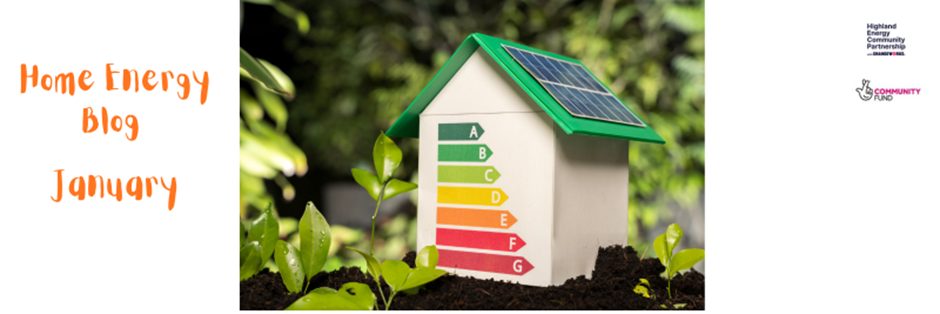
It’s been a very cold start to the year, and I hope everyone has managed to keep cosy in the snowy, frosty weather.
Welcome to our first monthly blog. I’ll be sharing more information and hopefully some ideas to help you reduce your energy bills and stay warmer at home as part of our home energy project. First off, is EPC’s…
Heating Homes in the Highlands
Living in the Highlands has many benefits—but low energy bills usually aren’t one of them. Many rural and Highland homes are older, exposed to harsh weather, and off the gas grid. This often means higher heating costs, colder homes, and fewer clear options for improvement. But there are opportunities to change this picture, and your Energy Performance Certificate (EPC) can be a really good starting point
What is an EPC and why are they useful?
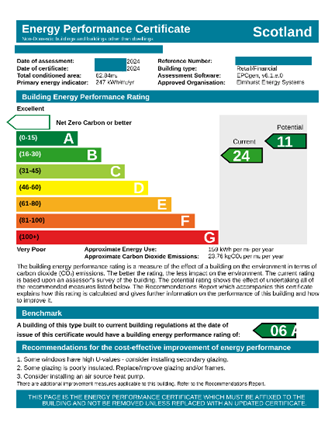
If you’ve ever bought, sold, or rented a home, you’ve probably come across an EPC. But EPCs aren’t just paperwork for property listings. They’re actually a useful tool to help us make our homes warmer, cheaper to run, and better for the planet.
An EPC gives your home an energy rating from A (very efficient) to G (very inefficient) shown in the colourful bar chart. It shows how much energy your home uses, how much it’s likely to cost to heat and power, and—most importantly—what improvements could make the biggest difference.
How can I find my EPC?
Not every property will have an EPC, but if available, you can find yours here.
In addition to looking at the bar chart to check your current and potential energy rating, there is a list of recommended measures in a table at the bottom of page 1 (example below).
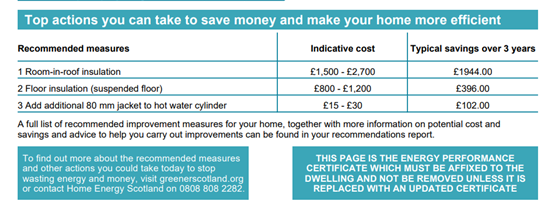
This list isn’t exhaustive, but will give you some initial ideas about measures that could be appropriate for your home.
Using EPCs for positive change
In Scotland, buildings make up 19% of our greenhouse gas emissions and are therefore a major contributor to climate change. EPCs are used to provide data to look at opportunities to improve the energy performance of the housing stock and reduce emissions. It also helps the Government target support to help improve homes with poor energy ratings and help for people struggling with fuel poverty.
Home Energy Performance in the Contin Area
According to the Scottish House Condition survey (2023), 56% of Scottish homes were rated as EPC band C or better. In Contin, Jameston & Tarvie, this is only 18%, with a similar picture across the Highlands. So, 82% of the homes in our area are rated at D or lower!
So, what can we do?
EPCs as a starting point for retrofit
An EPC is not a one-size-fits-all solution, but it is a starting point for retrofit planning. Retrofit means adding or making changes to your house after it has been built, in order to improve its energy performance.
- Insulation and draughtproofing
- Improving ventilation and reducing dampness and condensation
- Upgrading inefficient heating systems
Exploring renewable options where appropriate
A call to action
If you don’t know your home’s EPC rating, now is a great time to find out. Understanding how your home performs is the first step toward lower bills, a warmer living space, and a more resilient local community.
👉 Get information on your home energy rating by finding your EPC or creating your own Home Energy Check
👉 Explore retrofit options that suit your home and budget and find out about funding available.
👉 Contact Anna, your Community Energy Officer for advice and support.
Let’s start with knowing our homes better—and taking action from there 💚
Next month: I hope that you found this first blog useful. My plan for February is to cover some energy saving tips for heating and hot water, and some myth busting about Air Source Heat Pumps – but I welcome suggestions for other topics.